Successful AI adoption begins with understanding your business objectives, identifying where AI can deliver genuine value and creating a clear strategy that supports long term success. Businesses that take a strategic approach are far more likely to make informed investment decisions, manage risk effectively and achieve meaningful results from AI.
Because of the accessibility of AI tools, it has become a business responsibility. You do not need to have IT skills to use AI tools and platforms. Industry leaders are now becoming responsible for identifying opportunities, managing risks and making investment decisions.
Every department can benefit from AI, which makes leadership essential.
New AI tools are emerging almost every week, making it difficult for businesses to keep up. With so many platforms claiming to improve productivity, automate processes or reduce costs, it can be challenging to separate genuine business solutions from passing trends. Many leaders are asking themselves where they should even begin.
Every business has different goals. There is no one size fits all for everyone in relation to AI solutions. So, identifying which tools align with business objectives can be overwhelming.
Without a clear strategy, businesses risk investing in technology that does not solve the problems they actually face.
How do businesses know which AI tool will provide the best ROI (return on investment)? AI can deliver significant benefits, but only when it is implemented for the right reasons. Employers need to understand how AI will improve efficiency, productivity or customer experience before making an investment. Measuring expected outcomes before implementation helps ensure resources are focused where they will have the greatest impact.
The bigger question for many, is how viable is the proper use of AI tools?
Many businesses are excited by the possibilities of AI but remain cautious about making the wrong decision. The challenge is understanding where it can create the greatest impact.
By taking a strategic approach, employers can move beyond uncertainty, identify meaningful opportunities and invest with confidence rather than reacting to the latest technology trend.
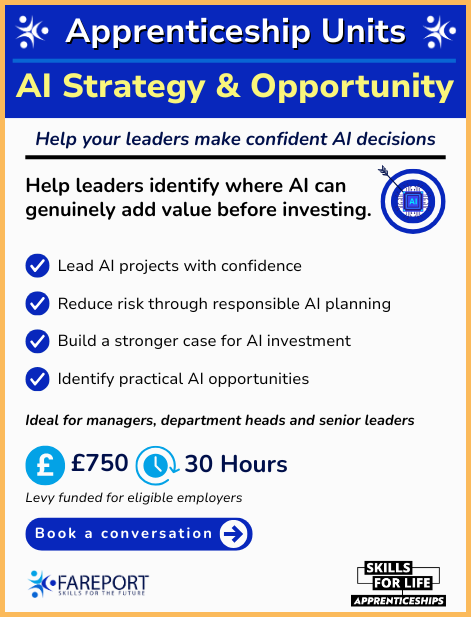
The AI Strategy & Opportunity unit is designed for leaders who need to make confident, informed decisions about AI before investing in technology. Rather than focusing on developing AI systems, this new Apprenticeship unit helps employers understand where AI can create meaningful business value, assess their willingness for adoption and build a clear strategy that aligns with their overall business objectives.
Employees will explore AI leadership principles, responsible AI, governance, investment planning and strategic decision making, providing the knowledge needed to lead AI initiatives with confidence.
Throughout the programme, learners will develop practical skills they can apply directly in the workplace, including strategic roadmaps and proposals to support your business from day 1.
They learn how to prioritise AI opportunities, evaluate potential solutions, engage stakeholders and create an implementation plan that balances innovation with risk. By the end of the unit, leaders will have a clear vision for how AI can support their business and a structured roadmap for moving from strategy to action, ensuring future investment is driven by evidence rather than uncertainty.