The apprentice rate is applied to apprentices who meet the following criteria:
Individuals under the age of 19
Or,
Those aged 19 and over who are in the first year of their apprenticeship
Once an apprentice is aged 19 or over and has completed their first year, they are entitled to the minimum wage for their age group.
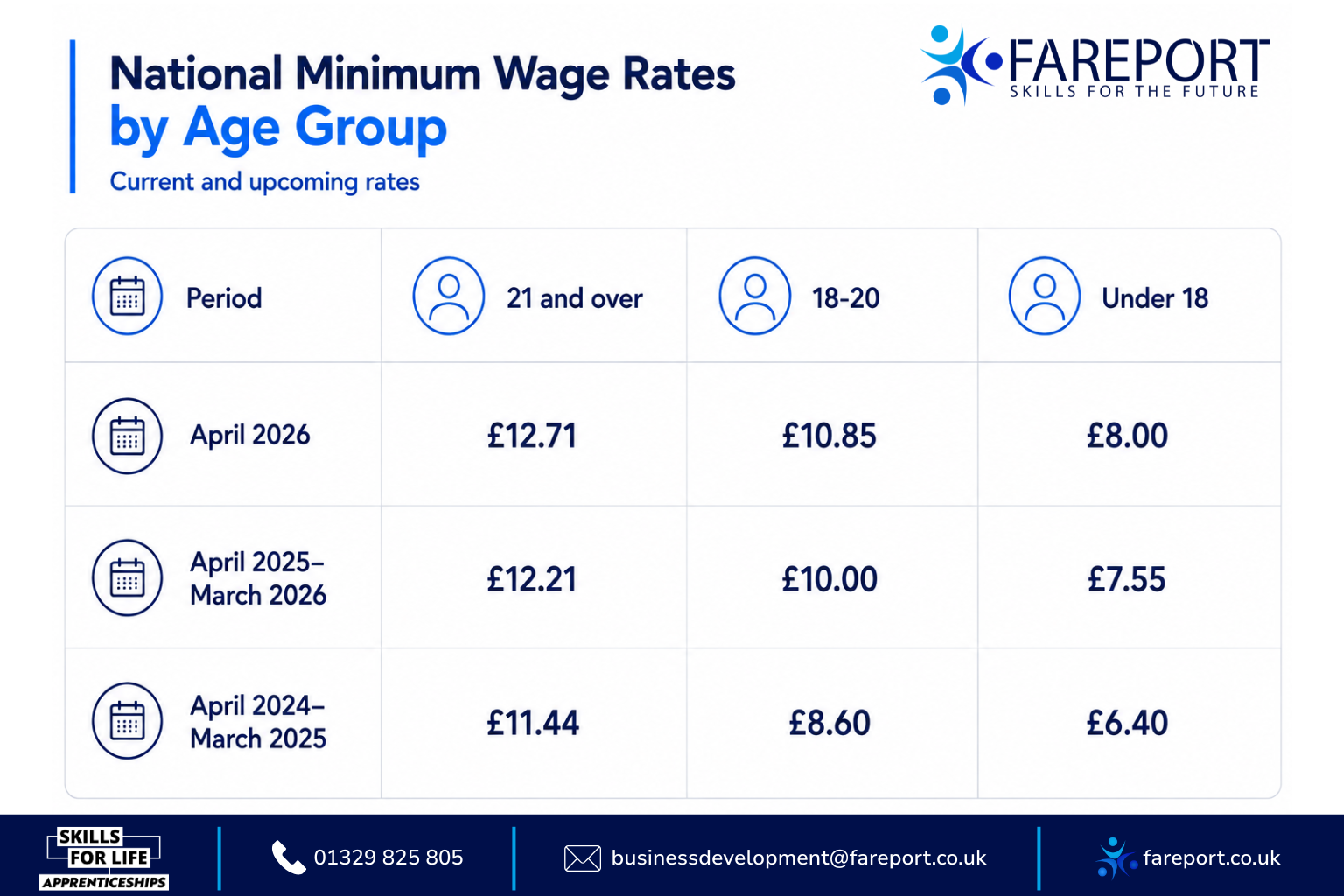
In 2026, those rates are:
- £10.85 per hour for those aged 18–20
- £12.71 per hour for those aged 21 and over
This distinction is important because apprentices who no longer meet these criteria must be paid the National Minimum Wage for their age group.
For Example:
A 22 year old apprentice starting their first year in May 2026 can legally be paid £8.00 per hour.
Once they complete their first year, they must receive at least £12.71 per hour.
This means an apprentice’s pay can increase significantly after their first year.
After completing the first year of an Apprenticeship, individuals aged 19 or over are treated like other workers for minimum wage purposes and must receive the age appropriate National Minimum Wage.
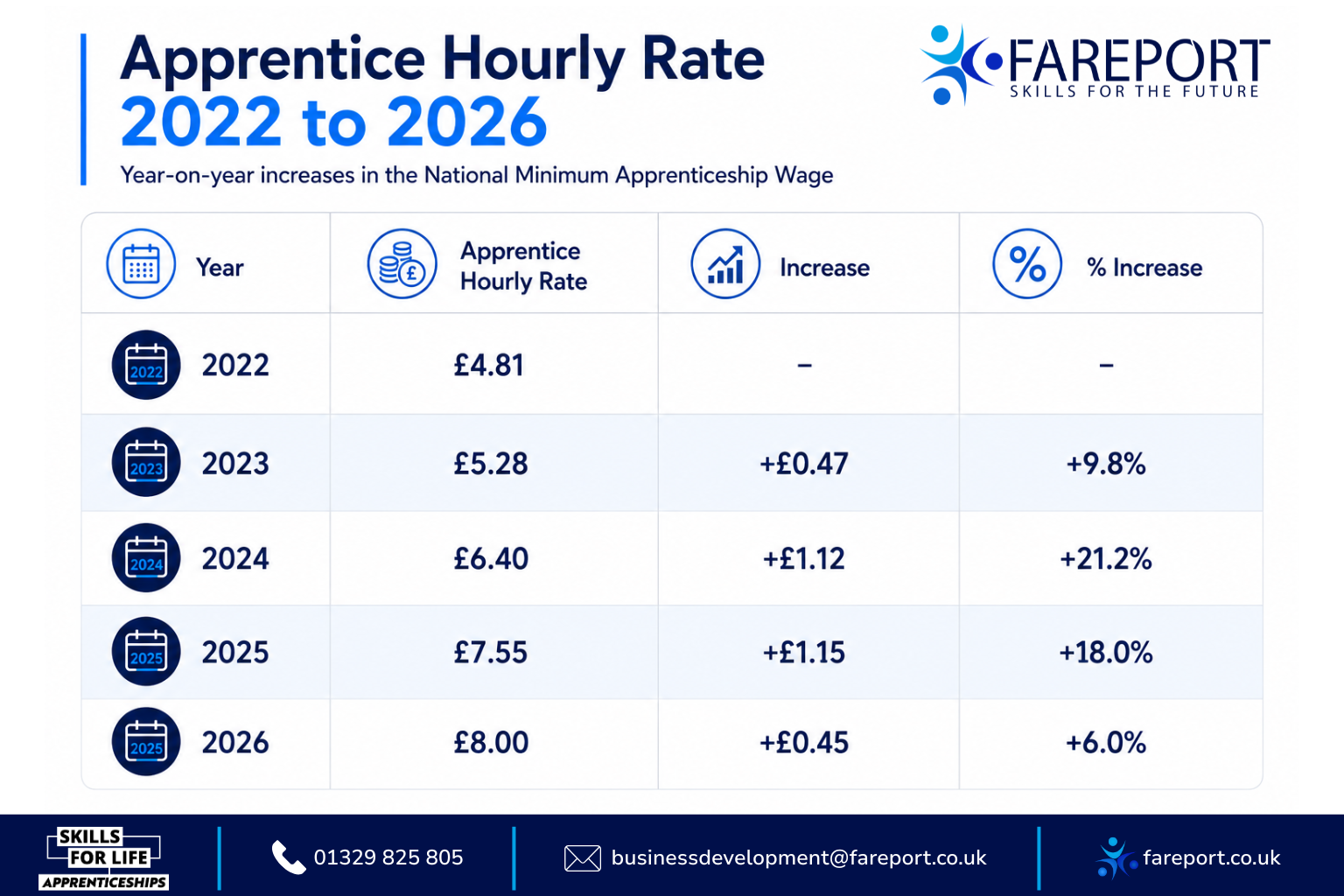
The apprentice rate is designed to support employers in bringing new talent into their organisations, all while providing structured training and development opportunities. Businesses are encouraged to invest in apprenticeships, helping individuals gain valuable skills, experience, and qualifications as they begin their careers.
However, this approach has prompted ongoing debate about whether apprentices should receive higher pay given the value many bring to their employers from an early stage. This is why there has been a significant increase in pay over the last three years to help support young people who want to upskill as well as earn a wage.
It is worth mentioning that employers don’t have to necessarily adhere to the apprentice minimum wage when employing a young person and enrolling them onto an Apprenticeship. An employer could decide to give the learner a larger salary based on their job role.
For apprentices, this system provides a clear pathway to higher pay which comes with career growth and qualification acquisition.
Apprenticeships allow employers to link pay progression with the development of new skills and qualifications, helping ensure employees are rewarded as they become more capable in their roles.