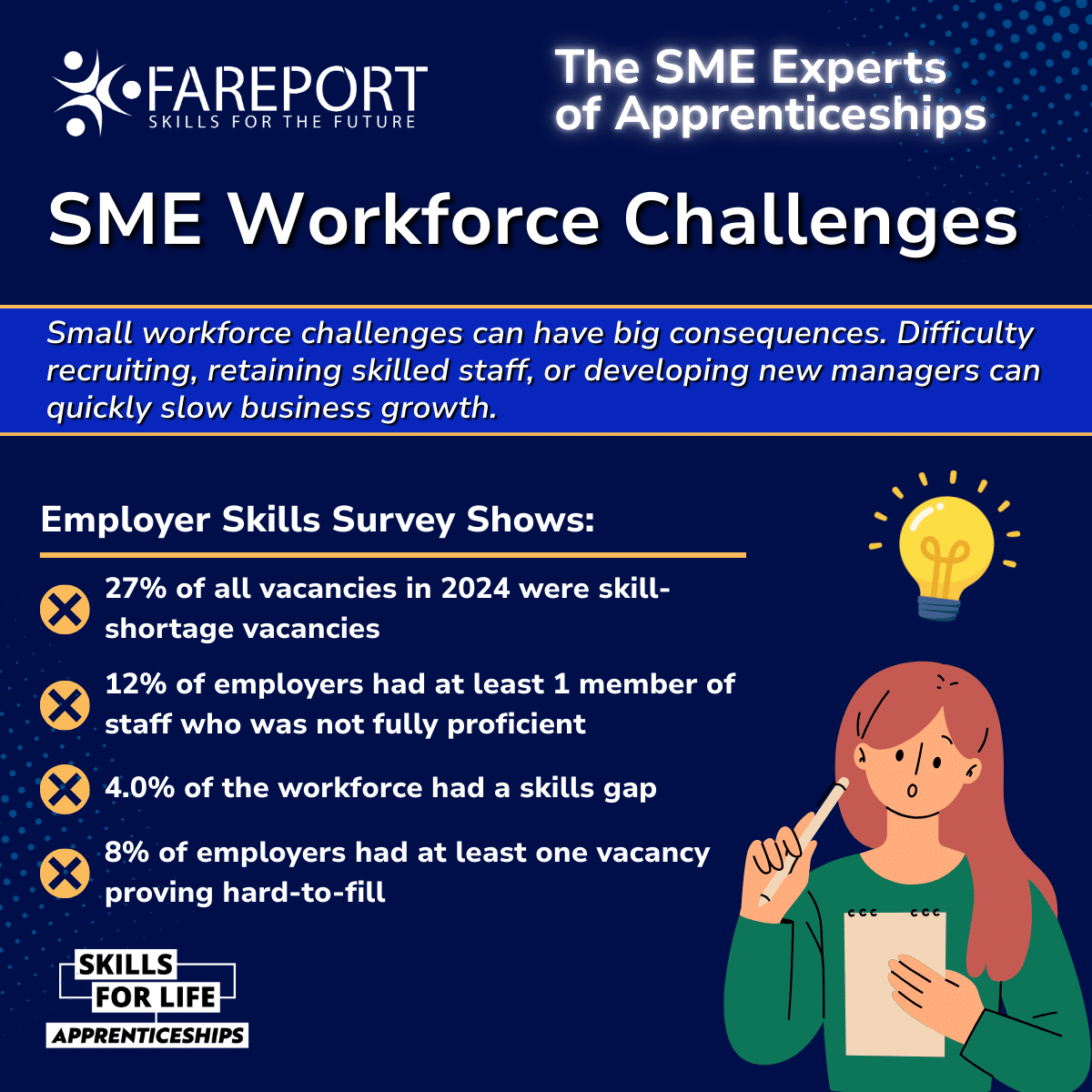
As we move into 2026 and get ready for the next 12 months, the SME landscape is changing at speed. Economic pressures, rapid digitalisation, shifting employee expectations, and skills shortages are reshaping how small and medium-sized businesses attract, retain, and develop talent.
While SMEs are known for their resilience and agility, 2026 will bring new workforce challenges that leaders need to be prepared for.
Here are the five biggest workforce challenges SMEs are likely to face in 2026, along with practical steps to get ahead of them.
Skills gaps increasing in digital, data & leadership
Skills shortages aren’t a new issue for SMEs, but they’re becoming more severe. In 2026, we can see the demand for digital and data capabilities grow, and it will continue to outpace the essential non-digital skills, particularly in roles related to automation, AI, data analytics, and digital marketing.
At the same time, leadership and management capability gaps will widen as SMEs promote high performers into management roles without offering the essential training employees need to understand how vital efficient leadership is.
What SMEs can do now:
- Invest in funded training such as Apprenticeships for existing staff
- Develop clear progression pathways to support internal talent
- Prioritise leadership and management capability early, not reactively
- Build a culture that encourages continuous learning
Retention challenges in a competitive hiring market
The labour market is predicted to remain competitive through 2026, and SMEs will continue to compete with larger companies potentially offering higher salaries, bigger benefits packages, and stronger employer branding. A report by The Productivity Institute emphasises that a sharp mismatch between required and available skills “will not only constrain interventions … but will also exacerbate inequalities in employment and earnings”.
Combined with changing employee expectations (such as work flexibility, development, wellbeing support), many SMEs could face higher turnover, especially in their most in-demand roles.
What SMEs can do now:
- Strengthen internal development to boost retention
- Offer clear career progression and training opportunities
- Provide flexible working options where possible
- Ensure man agers have the skills to engage and motivate teams
Keeping pace with technology and AI adoption
AI-powered tools, automation, and digital systems have already become essential for productivity, and it will only continue to grow in strength. But while large organisations have the resources to invest in technology and the training that goes with it, many SMEs risk falling behind.
A key 2026 challenge will be technology adoption without the tech expertise to support it.
What SMEs can do now:
- Upskill staff in digital fundamentals, data literacy, and AI awareness
- Identify processes that could be improved or automated
- Train managers to lead digital change confidently
- Work with providers who can help implement tech-enabled learning
The businesses that thrive will be those that combine people development with smart technology use.
Rising Compliance and Regulatory Pressures
By 2026, SMEs across sectors will face growing compliance requirements, from data privacy and cybersecurity to health and safety, financial controls, and emerging AI governance.
Even minor knowledge gaps can lead to penalties, operational disruption, or risk exposure.
What SMEs can do now:
- Identify upcoming regulatory requirements early
- Train staff through funded and accredited programmes
- Build compliance awareness into onboarding and ongoing development
- Develop internal experts through structured training pathways
Future-proofing compliance isn’t just about avoiding risk, it also builds trust with customers, partners, and employees.
Manager burnout and the growing need for strong people leadership
Managers in SMEs often wear multiple hats. They can be leading teams while also delivering operational work. As workforce pressures intensify, many SMEs see manager burnout and capability limitations become major barriers to performance and growth.
Strong people leadership will be essential for employee engagement, productivity, and retention in 2026.
What SMEs can do now:
- Invest in fully funded management and leadership Apprenticeships
- Strengthen coaching, communication, and performance skills
- Build a healthy, supportive culture from the top down
- Ensure managers have the time and tools to lead effectively
Got Questions?
Reach Out Now!
Don’t wait – we’re here to help! Drop us a message and we’ll get back to you right away.
Whether it’s a quick question or something more, fill out the form below and let’s connect today!
Why preparing now matters
SMEs that begin planning for future workforce needs today can position their businesses to be stronger, more resilient, and ready for growth in 2026 and beyond. By taking a proactive approach, organisations can build skilled teams, embrace new technologies with confidence, and create sustainable talent pipelines that support long-term success.
Investing in people is a powerful foundation for SME growth and continued success in the years ahead.
How Fareport Supports SMEs for 2026 & Beyond
Fareport works with SMEs across the UK to develop productive, confident, and future-ready workforces through funded apprenticeships and tailored training programmes.
We help SMEs:
- Identify skills gaps
- Develop strong managers and leaders
- Build digital and data capability
- Improve retention and engagement
- Support new and existing staff to thrive
As the challenges facing SMEs grow, so does the importance of a skilled, well-supported workforce.
Complete our form today and find out where you need to invest in training. Our team will discuss your requirements and recommend the best programmes that would suit your sector and employee needs.